

Coping with drought
It messes with my head as well as my garden

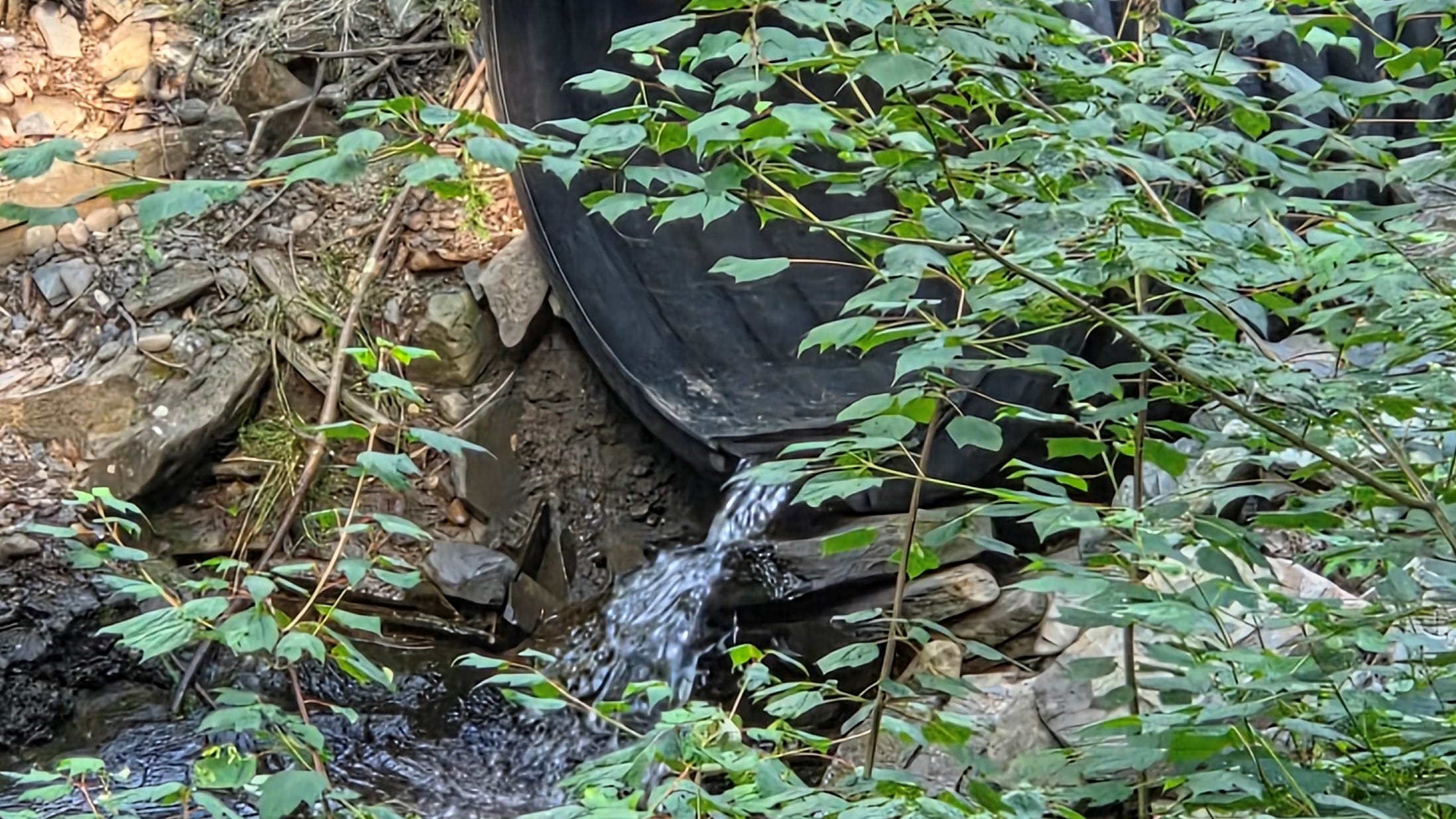
“To garden here [England] is a source of refreshment. Gardens here are a part of life, as in no other country except, perhaps, Japan. An eccentric maritime climate has produced an almost unique relationship between soil, plants, animals and people—there is an alchemy which links them in an odd taken for granted harmony. Inevitably I meet devoted and first class gardeners the world over, but they are exceptional in their surroundings. Here, in this country, wherever I go, from the grandest to the most modest garden I meet with a sensitivity towards and awareness of plant life which even though expressed in a million different ways…still reflects this hidden relationship between humans and plants.”1 ~Russell Page
As I mentioned in my Note, the difficulties British gardeners are enduring during their drought remind me of the droughts I have lived through. It also makes me a bit jealous of their “odd taken for granted harmony” where, for the most part, they seemed to stick plants in the ground, and they just grew. That’s not working so well for them now. It’s a sharp learning curve for any gardener when they’re thrust into an unfamiliar climate. Gardeners suffer when their plants suffer, and I remember that suffering.
The scars are there: if we go without rain for a week, I start obsessively checking the ten-day forecast and monitoring my containers and newly-planted acquisitions for signs of stress. If the temperature rises, my vigilance increases. If the lawn turns brown and the hydrangeas droop, I start moping about in sympathy. I wasn’t always this way.
I was born and raised in the suburbs, and until we moved out to the country to our former home, water was just something that came out of the tap. No reason to question its purity (though I probably should have) or doubt its availability. Even its pressurized state was taken for granted.
Our house had a shallow well–under 30 feet deep. In spring the water table was high, and our well became an artesian well. That is, there was so much pressure that the water came up to the surface on its own, up six feet of standpipe in the basement which was set up to relieve this pressure. As a matter of fact, during heavy spring rain there were often several little springs popping up on the property, not to mention the minor creek running down the driveway.
As summer progressed, the standpipe stopped flowing, a fact that was duly noted and remarked on. In a good year–and in the beginning (1990) there were a lot of good years–we got consistent rain throughout the summer, enough to keep us in water. But the first year we had a drought, I got a real education.
My husband, who grew up in a rural home, had started muttering about the water table getting low and the well going dry and needing to conserve water. He may as well have been talking about the boogie man. I just did not get it. I implemented the conservation measures he advocated, but I felt like I was humoring him.
And then one August afternoon, the clothes washer was drawing water and one of our children was washing lunch dishes, and suddenly the water stopped in mid-rinse. “Hey, what happened to the water!” exclaimed the dishwasher. I rushed to stop the washing machine, but the pump had already sucked up the mud at the bottom of the well. The well had gone dry.
Actually, the well hadn’t gone dry so much as we were pumping water out faster than it was seeping back in. Once we got the pump cleaned out, we had water again, but we had to be very careful about how much we drew out at one time, until eventually precipitation brought the water table back up to normal.
My attitude toward rain and water has changed dramatically. I can’t believe that people hose down their driveways with it. When someone remarks, “Isn’t it awful, all this rain we’re having?” I have to bite back a lecture.
To me, rain coming down is better than money in the bank. I can remember saving the cooking water drained from spaghetti so I could let it cool and then water my container plants with it, so I find the whole subject of collecting and storing rainwater compelling.
The drought we experienced in 1999 was particularly severe. After it was over, I wrote an article summarizing what I had learned:
There are no green thumbs or black thumbs. There are only gardeners and non-gardeners. Gardeners are the ones who ruin after ruin get on with the high defiance of nature herself, creating, in the very face of her chaos and tornado, the bower of roses and the pride of irises… . Defiance…is what makes gardeners. ~~Henry Mitchell
The natural world is forever dishing out “ruin after ruin” and it is the gardener’s job to pay attention and learn from it. We call this experience. Paying attention is what makes a green thumb green. We practice our “defiance” by learning from our disasters and making the most of our gardening misfortune, whatever it may be.
Here in the Northeast we’ve experienced several droughts in the past decade. Plants that were meant for a mesoscapic way of life were thrust into a xeriscapic one. Gardens that were designed with the assumption of an inch of water a week made do with fractions of an inch per month.
We have a very shallow well, and when I most needed to water my plants, I couldn’t. Every drop needed to be conserved for cooking and washing. Most gardens, mine included, were not a pretty sight. I did allow myself a bit of hand wringing and self-pity, but I also tried to observe what was going on in my garden. Here are some things I noticed:
Mulch
Gardens that were mulched fared much better than those that weren’t. Given the almost constant lecture about mulch that goes on in garden writing, this should hardly be surprising.
Having been gardening in a climate where the water-conserving benefits of mulch had not previously been strictly necessary, I was surprised at how much of a difference it made. My neighbor Marilyn started a modest flower border last spring, composed almost exclusively of divisions and seedlings from mine and others’ gardens.
The piece of Aster ‘Purple Dome’ I had given her was floriferous and bushy by season’s end. My original plant was a desiccated disaster. The difference was, Marilyn’s bed was mulched. Will I mulch my whole garden this year? Frankly, it’s been on my list of things to do ever since I started gardening, and I’ve never gotten to it yet. Will I mulch anything new or dear? You bet.
Flowers that did well
Plants with taproots or other underground storage organs fared better than plants with fibrous root systems. Many members of the mallow family, such as Malva ‘Zebrina’ and Malva ‘Bibor Felho’ hardly looked fazed by the drought. My oriental lilies looked fairly good, too.
Of course, plants that are naturally adapted to dry climates did fine as well. All the yarrows were happy, as were furry plants like rose campion and lambs’ ears. Plants with fleshy leaves, such as sedums, also appeared unstressed by the lack of moisture. I don’t have too many dry-adapted plants, because normally the clay soil is too moist for them to do well.
Location, location, location
If I had had any doubt before, I now knew where the driest spots were in the garden. Plants growing in those spots were the first to wilt and the most likely to die.
But a few areas surprised me by how well plants did there. For example, I had split off another piece of the previously mentioned ‘Purple Dome’ and planted it in a different location in my own garden. While it didn’t do as well as the mulched plant in Marilyn’s bed, it certainly did better than my original plant.
My best guesses are that the plant in the new location enjoyed runoff from the barn and perhaps also a pretty high water table. That poor original plant is in one of the drier spots, a fact I had never realized before, because the natural precipitation had been adequate. That was one plant I decided to start mulching.
In general, it surprised me how well my established plants did despite drought, lack of mulch, and hotter than usual temperatures. Sure, there were plenty of limp leaves and fewer blossoms than usual, but no established plant gave up utterly.
Plants that form next year’s flowers in the previous year, such as most of the flowering shrubs and the lilies and daffodils, made a poorer show than usual in the year after a droughty year. Tulips actually do better with a hot, dry summer.
Still not sure how to cope
What I couldn’t learn from this past year’s growing season was how to plan for the future. Was the drought of ’99 an anomaly or a portent of things to come? Should I chalk it up to El Niño or global warming?
If weather like this becomes typical, I will have to seek out more drought-tolerant plants. However, if our climate reverts to what I think of as normal, said drought-tolerant plants would be likely to rot on me. Even though we’ve had several droughts, we’ve had several normal years as well. It’s hard to know what to do, besides setting up more rain barrels. And spreading more mulch.
As Henry Mitchell so wisely observed, every year there’s something going on in the garden that adversely affects some of the plants. Almost always, some other part of the garden benefits from those circumstances. We gardeners can’t change the weather, but we can learn from it and perfect our defiance.2
________________________________________
Russell Page, as quoted in The Gardens of Russell Page by Gabrielle van Zuylen, New York: Steward, Tabori & Chang, 1991. Pp. 123-124.
© 2000 Kathleen Purdy. Originally sent as an email to my garden buddies. Reprinted in Small Honesties: The Journal of the North American Cottage Gardening Society and the Connecticut Horticultural Society Newsletter.
I remember one dry summer my aunt would take an evening bath, then dip out the bath water and hand it out the window by the bucketful to her husband to use to water the garden. At the time, I don't recall it was that dry. But fast forward to our big drought of 2012, when the city ordered everyone to stop watering lawns. You know who stuck out like a sore thumb? Those who ignored the order and kept watering, as though we all wouldn't notice how green their lawns were! Anyway, great post and much food for thought as I'm approaching nearly two weeks since our last significant rainfall. The hydrangeas are looking pretty sad right now!
Thanks for the suggestions for perennials. Like you, having lived through months of extreme drought last year in New Hampshire, I too am constantly aware of rain, snow fall amounts and the speed of snow pack melt. A non-gardening friend finds our rain water collecting efforts (rain barrels, buckets and at times even wheelbarrows) extremely odd. Our water conservation techniques in the house are completely foreign to her.
I have been amazed at how well our daylilies did last year and are doing this year. It's probably their tubers as you pointed out.